

11-13 MAY 2027 // seabedminerals.net
11-13 MAY 2027 // seabedminerals.net
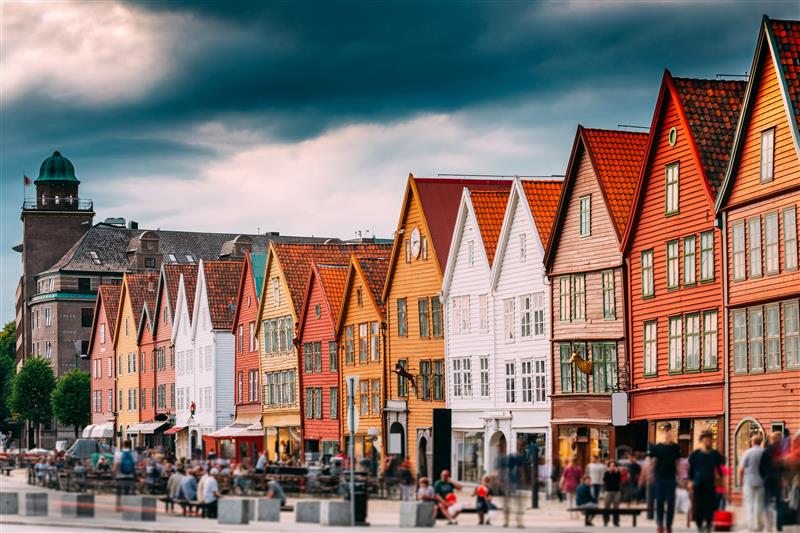
Bergen // Norway
Global currents
As we look towards 2027, the seabed minerals industry continues to gain momentum amid a rapidly evolving landscape. New companies are entering the sector while established players advance their projects, technologies, and commercial plans. Governments and stakeholders are weighing the potential of commercial mining against calls for a global moratorium, while the International Seabed Authority (ISA) has yet to finalize its exploitation regulations.
In response, some companies are advancing parallel pathways toward exploitation in international waters under US regulation. The United States is also accelerating domestic efforts, with the first federal lease sales planned for offshore American Samoa, the Northern Mariana Islands, and Alaska in the second half of 2026.
Japan continues to advance its state-led seabed minerals programme after years of exploration and technology development. In early 2026, the country achieved a world first by successfully retrieving rare-earth-rich mud from nearly 6,000 metres near Minami-Torishima Island. Larger-scale trial operations are planned for 2027, while the Nippon Foundation has proposed a polymetallic nodule mining test in the same area.
India and China remain key players. Although India's offshore mineral block auction was annulled in late 2025, authorities may offer new blocks in the future. India recently signed a new ISA contract for polymetallic sulphides in the Indian Ocean. China holds five ISA contracts across the Pacific and Indian Oceans and, in April 2026, released its first comprehensive seabed geochemical atlas of its eastern waters.
These developments highlight key topics we look forward to exploring during the conference, including regulatory divergence, environmental management, exploration strategies, technological advancements, and value chains.
Call for abstracts
Previous conferences have attracted a diverse international audience, including exploration companies, service providers, academic professionals, policy makers, environmental organisations, regulators, and legal and financial experts. In a rapidly changing industry where networking, knowledge sharing, and collaboration are essential, we look forward to another vibrant and well-attended event in 2027.
Globally, knowledge-building and technological advancements are progressing rapidly as the industry transitions from early exploration toward commercial development. We invite companies, institutions, and academia developing new methods, technologies, and knowledge to submit abstracts and showcase their work at the conference.
We welcome contributions within the following topics:
- Environmental understanding, impact, assessment, and monitoring
- Exploration strategies and technologies
- Resource estimations and economic feasibility
- Production technologies and solutions
- Mineral processing
- Digital solutions – AI, data management and data sharing
- Regulations and legal frameworks
The committee encourages sharing of project experiences, examples of knowledge and technology transfer, and value chain perspectives. We welcome contributions from all relevant regions across the globe and encourage postgraduate students to submit their work.
Dive in and join us to share your knowledge at the upcoming conference by sending your abstract to events@geopublishing.no(opens in new tab)(opens in new tab) by 15 January 2027.
You can download the Call for abstracts below:
Abstract requirements
- Word format
- Font: Times New Roman, 12 pt.
- Min. 500 words, max 800 words
- Min. one figure
- Portrait photo of presenter
Abstract submission
About
Demand for critical minerals is expected to be greater than the supply from the mining industry and recycling. Further, the value chains are highly geographically concentrated, making them vulnerable to political instability, geopolitical risks, natural disasters and possible export restrictions.
For whom?
Why?
Organized by

Critical Knowledge
Critical Technology
Critical Minerals
Please contact Ingvild Ryggen Carstens, events@geopublishing.no, for information about pricing for start-ups, students and out-of-work professionals.
Terms & Conditions:
GeoPublishing AS reserve the right to alter the program. Substitutions to your registration may be made at any time by contacting the organizers in writing on events@geopublishing.no.
Venue
Bergen, Norway
ICEBREAKER - 11 May
19:00-21:00
Finger food and drinks in the bar
DAY 1 - 12 May
Session I
Opening Remarks
09:00 Ingvild Ryggen Carstens, Publisher & General Manager at GeoPublishing
TBA
TBA
Coffee Break
TBA
Session II
TBA
TBA
Lunch
TBA
Poster Session
TBA
TBA
TBA
Session III
TBA
TBA
Coffee Break
TBA
Session IV
TBA
TBA
End Day I
17:00
Evening Event
19:00 Aperitif
20:00 Dinner
DAY 2 - 13 May
Session V
TBA
TBA
Coffee Break
TBA
Session VI
TBA
TBA
Lunch
TBA
Session VI
TBA
TBA
Session VII
TBA
TBA
Coffee Break
TBA
Panel
TBA
End day II
16:00
Program Committee

Annemiek Vink

Eric Young
Laurens de Jonge

Anna Lim

Jon Hellevang

Øystein Bruncell Larsen

Alden Denny

Hilde Ottesen Braut

Ingvild Ryggen Carstens

Ronny Setså
Media partners

